Web app for Toleranca marketing d.o.o.
RideShare
Event carpooling platform with real-time CO2 impact tracking

Overview
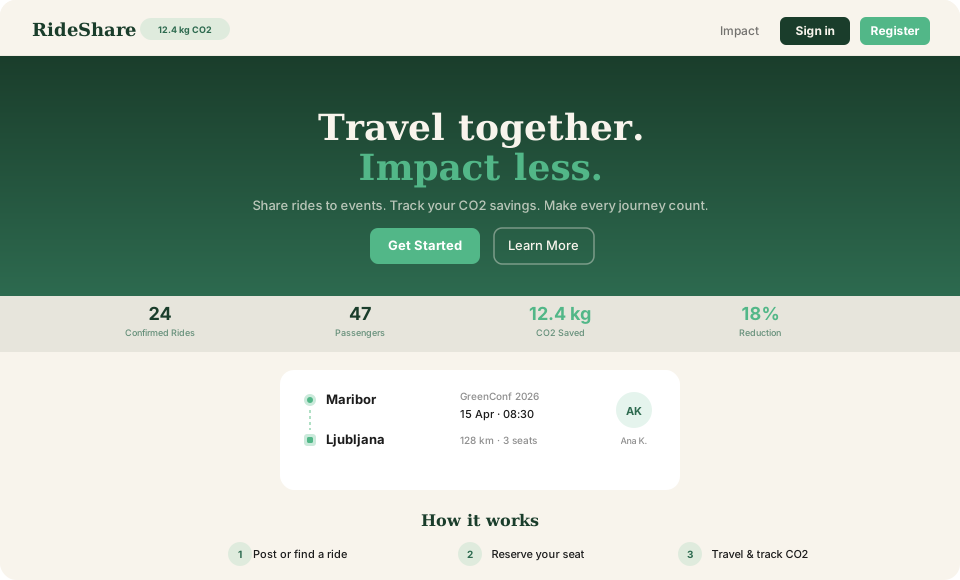
RideShare is an event-focused carpooling platform built for Toleranca marketing d.o.o., Slovenia's leading professional event organizer. It connects conference and event attendees for shared rides, reducing travel costs and carbon emissions while building community before the event even starts.
Drivers post available seats on their route, passengers browse and reserve spots, and organizers get a real-time view of the environmental impact their event is generating — all through a server-rendered interface that works instantly on any device.
The challenge
Large conferences and business events draw hundreds of attendees from across Slovenia and neighboring countries, most driving alone. This creates parking pressure, increases costs for attendees, and runs counter to the sustainability goals that modern event organizers are expected to uphold. Existing ride-sharing platforms are generic — they don't understand events, don't track environmental impact, and don't give organizers any visibility into attendee travel patterns.
Toleranca needed a purpose-built solution that ties carpooling directly to their events, provides measurable CO2 reduction data, and is simple enough that conference attendees will actually use it without a tutorial.
The solution
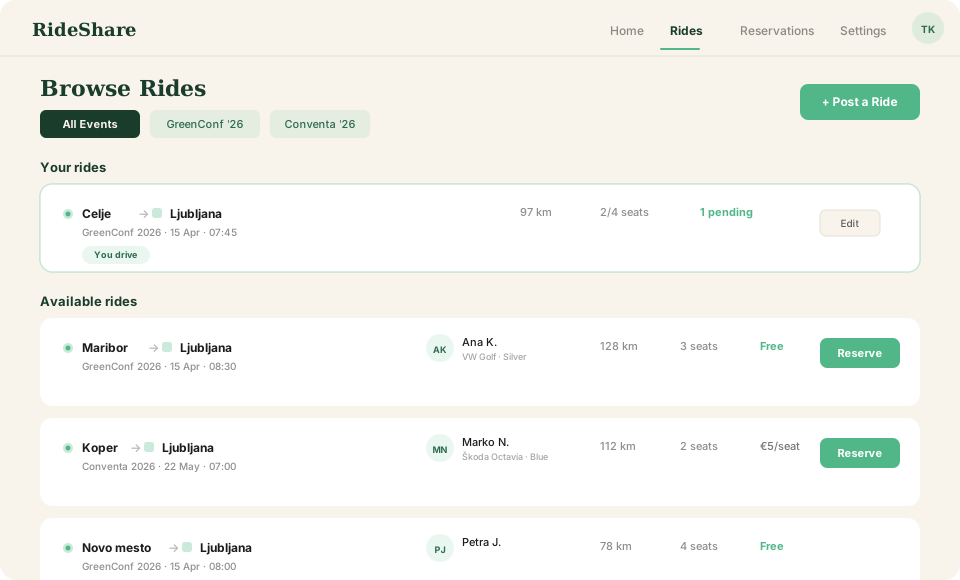
A server-rendered carpooling platform where every ride is tied to a specific event. The two-step ride creation flow — pick your event, then fill in the route — ensures rides are organized and discoverable. Passengers browse available rides filtered by event, request a seat, and drivers confirm with one click.
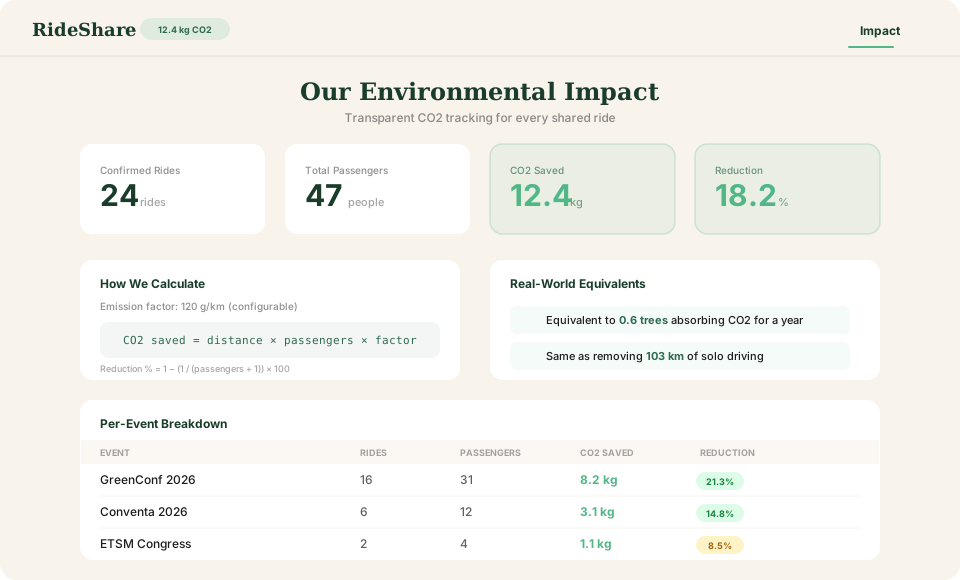
The CO2 impact engine calculates emissions saved per shared ride using configurable emission factors, then aggregates the data per event. Organizers see confirmed rides, total passengers, kilograms of CO2 avoided, and reduction percentages — numbers they can put directly into sustainability reports.
The entire UI is server-rendered with fluent-html and HTMX. No client-side framework, no bundle — just HTML fragments swapped via morphing. The result is an interface that feels like a SPA but works on conference Wi-Fi where SPAs choke.
Features
- Event-linked rides — Every ride is tied to a specific event, making discovery and organization intuitive for attendees
- Two-step ride creation — Select event first, then fill route details with auto-calculated distances
- Seat reservations — Passengers request seats, drivers approve or decline, with status tracking throughout
- CO2 impact dashboard — Real-time calculation of emissions saved per ride and per event, with configurable emission factors
- Public impact page — Transparent CO2 methodology and per-event breakdown, shareable by organizers
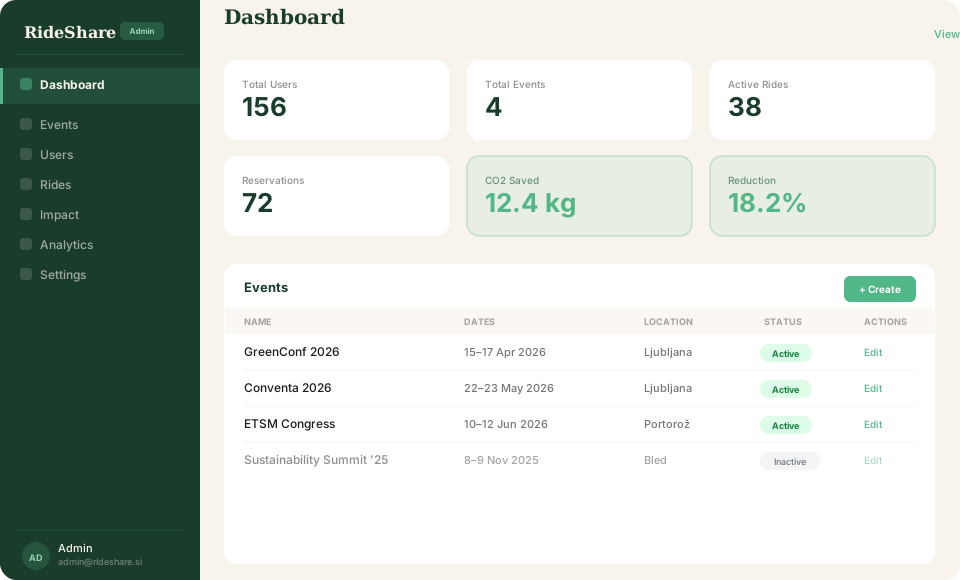
- Admin panel — Full event, user, ride, and reservation management with impact analytics
- Driver management — Passenger lists, bulk confirm/decline, ride editing, and contact info
- Auth system — Registration, email verification, password reset, and profile management
Technical highlights
- Zero-JS architecture — Full interactivity via HTMX morphing swaps, no client-side framework shipped
- Type-safe HTML — fluent-html generates HTML with compile-time validation and fluent Tailwind methods
- CO2 calculation engine — Configurable emission factors with per-ride and per-event aggregation
- Feature-modular structure — Organized by domain (rides, reservations, events, co2, admin, auth) with shared components
- Prisma with PostgreSQL — Typed queries with includes, aggregations, and relational data modeling
- SSR-only responses — No JSON API; every endpoint returns rendered HTML views
Related projects

JT Vault
Financial management and business operations platform for digital agencies
Tela
AI design system that turns natural language into production-ready HTML

JT i18n
Self-hosted translation management system for multi-format, multi-locale apps
Want something like this?
Tell us what you need and we build a working prototype first, so you see it before you pay for it.